

ABOUT
Overview
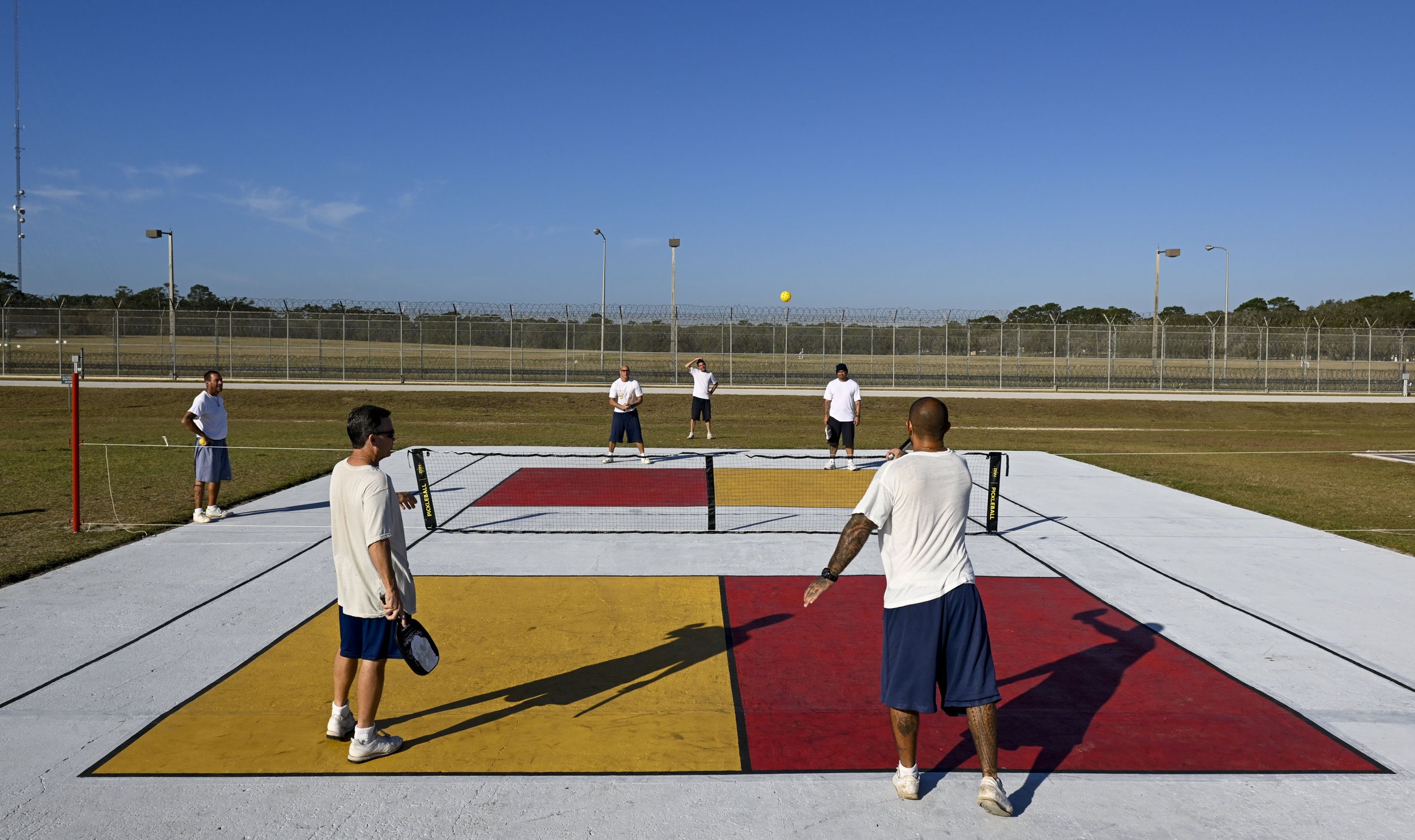
PICL, the Pickleball for Incarcerated Communities League, was founded on a simple belief: organized sport can be a real tool for restorative justice. Our founders include formerly incarcerated people, pickleball players, and advocates who saw what happens when the game goes inside. People with little to do find structure, exercise, and teammates.
It started in 2017, when Roger BelAir offered to teach pickleball at Chicago’s Cook County Jail. Disciplinary problems went down, and people who wouldn’t speak to each other started playing together. Today PICL runs programs in 88 correctional facilities across 28 states and DC, plus Canada.
What Do We Do?
Equipment: Every facility receives a kit of 12 paddles, 24 balls, and 2 nets, matched to the space it has.
Coaching: Volunteer coaches run regular clinics inside, teaching incarcerated participants and correctional staff the game together.
Curriculum: Our 8-session program manual, written for prison libraries, gives coaches and facilities a structured way to teach and keep teaching.
Staying power: The goal at every facility is a core group of players who can teach others, so pickleball keeps going long after the first clinic, without depending on outside help.
Why Is This Important?
Nearly everyone in prison eventually comes home, and what happens inside shapes who walks out. Pickleball is easy to learn, fits in small spaces, and is social by design: you can’t play doubles alone. On the court, players practice what reentry asks of them, like owning mistakes, communicating under pressure, and playing by shared rules, while getting regular exercise.
When correctional staff learn and play alongside incarcerated participants, it changes the dynamic, even if only for an hour. That’s the second chance we’re working toward, one court at a time.